
Your Jewelry Needs Cleaning (Just Like Your Underwear):
The Right Way to Do It
Your Jewelry Needs Cleaning (Just Like Your Underwear):
The Right Way to Do It
Have you ever wondered why your earrings itch or your diamond looks dull? It’s probably because it’s time to clean your jewelry! In the newest installment of The Engagement Ring Podcast by Melanie Casey, designer Melanie Casey discusses the benefits of owning an ultrasonic jewelry cleaner and the importance of regular jewelry cleanings.
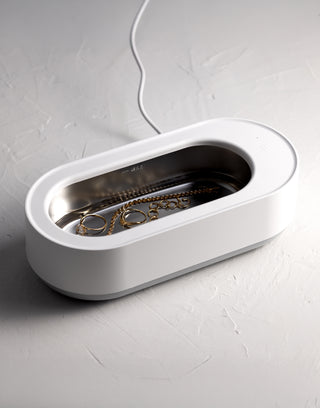
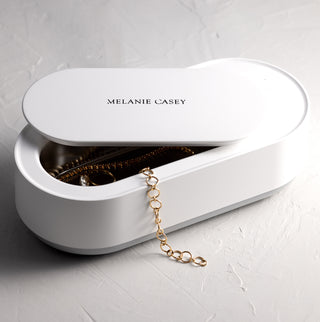
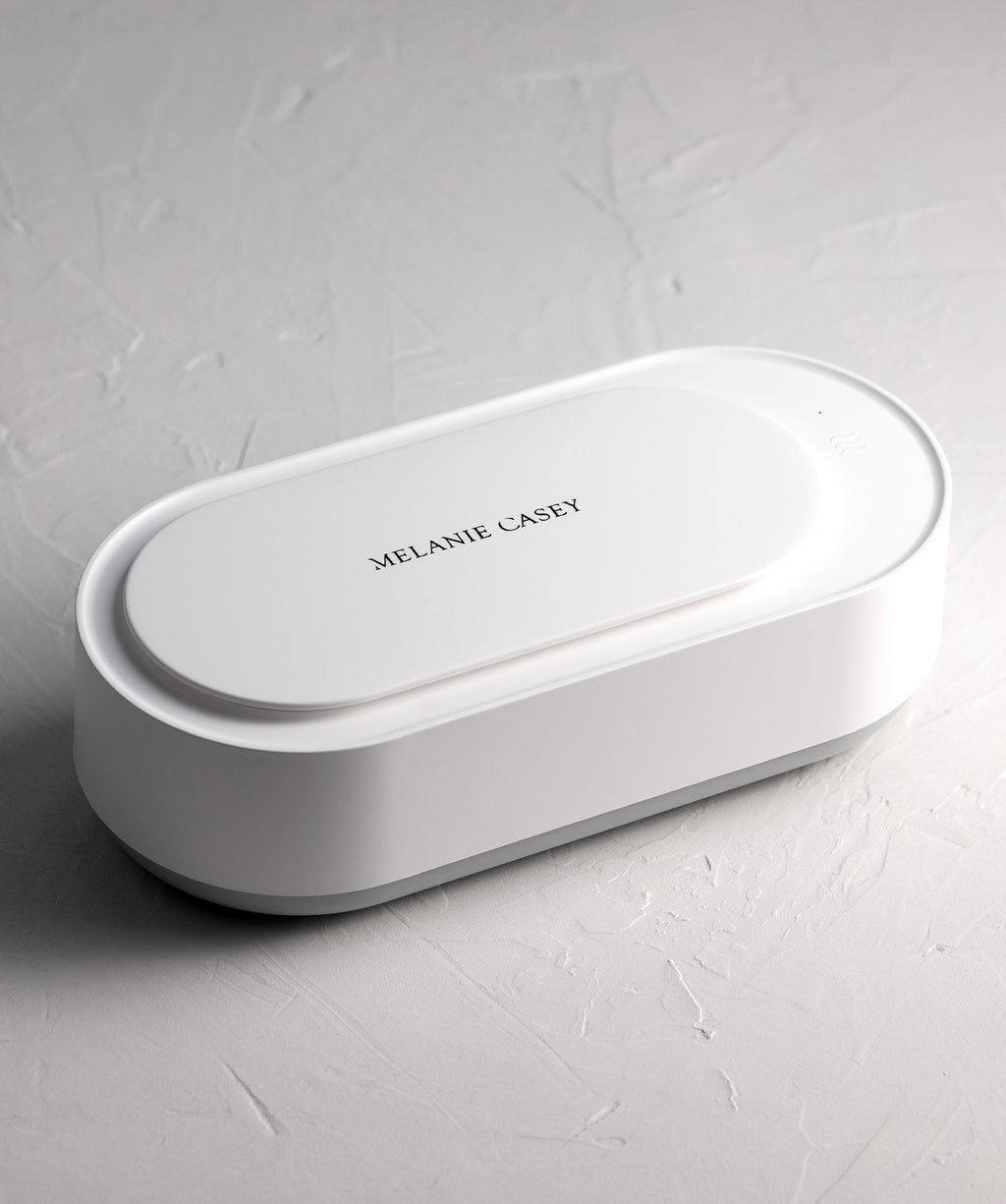
Hear the full episode below or take a closer look at our very first jewelry cleaner, the Melanie Casey Ultrasonic Jewelry Cleaner!
Why Get an Ultrasonic Jewelry Cleaner?
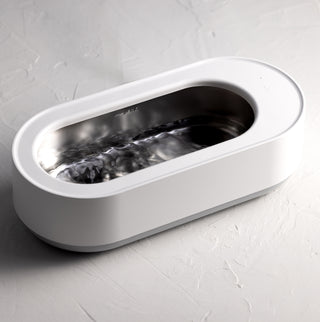
While the simplest jewelry cleaner is a soft-bristle toothbrush and some blue dish soap, an ultrasonic jewelry cleaner will take this basic approach to another level. This small machine packs a punch, removing dirt and grime from hard-to-reach places, including prongs, clasps, and earring posts. Perfect for at-home use, this machine uses no chemicals, only water, a touch of dish soap, and ultrasonic vibration to bring like-new sparkle to your fine jewelry.
Benefits of Regular Jewelry Cleanings
- Brighter sparkle
- Preserve structure and integrity
- Remove dirt and grime
- Stop your earrings from itching
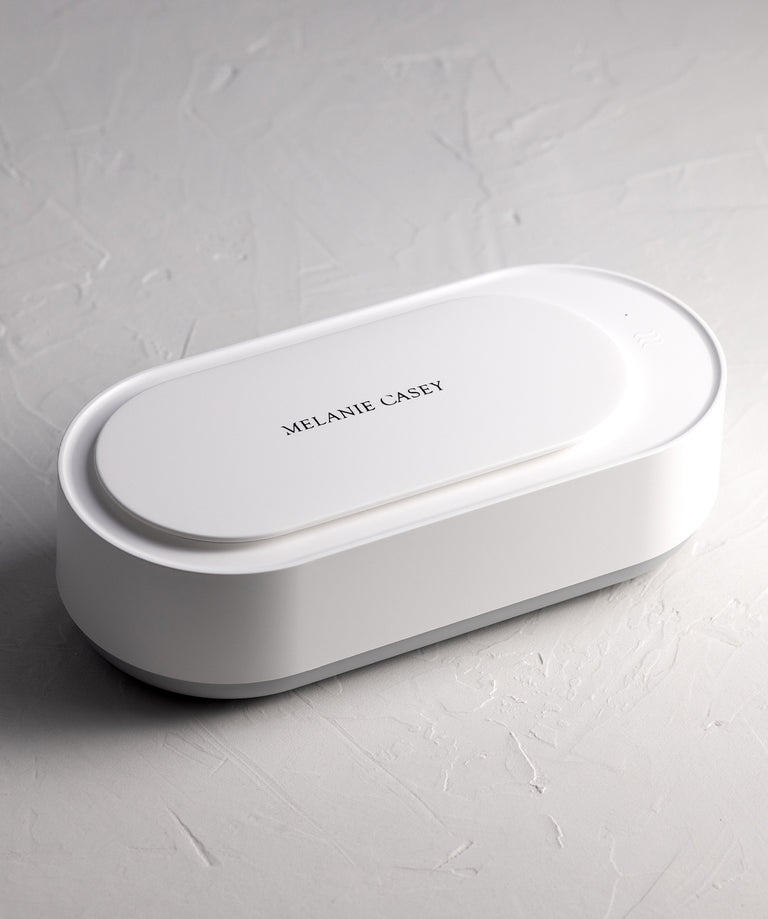
How to use the MC Ultrasonic Jewelry Cleaner:
- Gently place your jewelry into the cleaning tank
- Fill the tank and add a drop of liquid dish soap
- Let the jewelry cleaner do its thing!
- The blue indicator light will turn red when the cleaning cycle is complete
- Optional: Use a soft toothbrush to gently scrub behind your setting to remove any loose dirt
- Rinse clean with clean water
Listen to the Podcast Episode
🎙️
Episode 10
Just Launched:
Your Jewelry Needs Cleaning (Just Like Your Underwear): The Right Way to Do It
Podcast Transcript:
Melanie Casey: Hi, friends. Welcome back to the engagement ring podcast. This is Melanie Casey, and today, I'm talking about cleaning your jewelry. So the simplest way to keep your jewelry looking beautiful and lasting is to clean your jewelry. It's no surprise that rings come into our office for repair that are jam packed with lotion or or grandma's meatball recipe or whatever you could imagine.
And it's actually very damaging to your ring to have it sit with stuff in it and on it because that stuff actually turns into microscopic sandpaper. If your jewelry is dirty, it will not last as long as if it's maintained clean. It also just doesn't look as good. Let's be honest. It is super, super easy to clean your jewelry at home.
The simplest way to do so is use a soft toothbrush, plain water, and a touch of liquid dish soap. The reason dish soap works is because it cuts through the grease just like it cuts through the grease on your dishes, And the gentle scrubbing from a toothbrush allows you to work the bristles up and behind the stone from the inside. That is where you're gonna pull most of your grime out. You can, if it's really bad, give it a quick, soak a minute or two, but, frankly, it's not even necessary. Generally, the grime that's stuck on there is very loose and very, very easy to release off of your metal and your stones, and all it needs is just that extra bit of help.
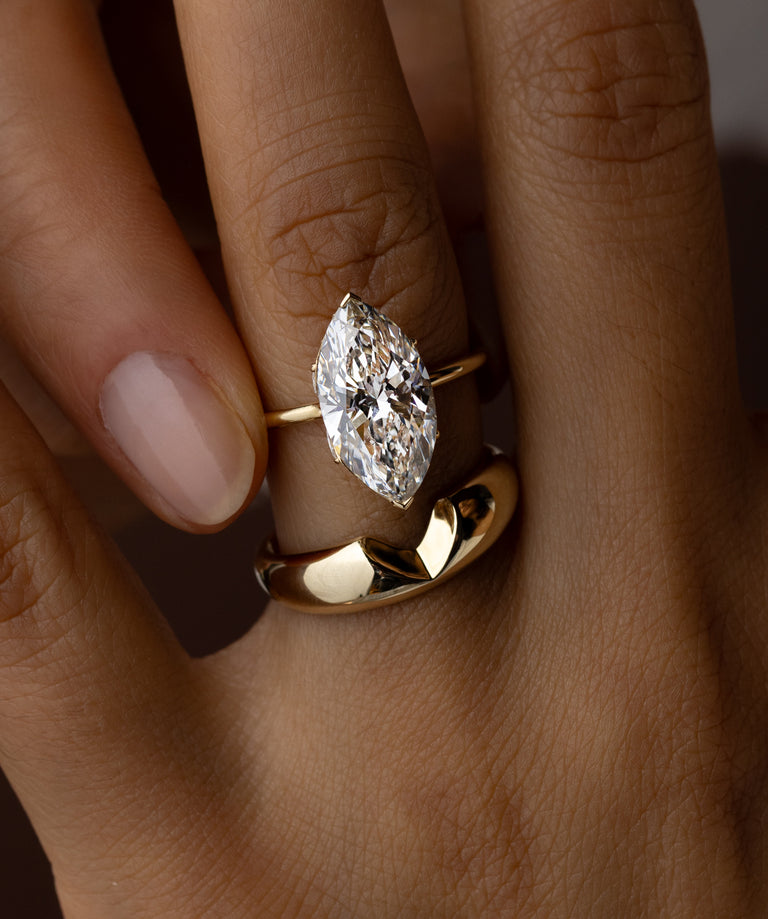
Sometimes a toothbrush is all you need. You don't even need the soap, but I find the soap, if you're gonna take the time, does help. Last week, we launched an ultrasonic jewelry machine that is at home safe. It works exactly the same way as the old school free method, but it does a better job. It gets clasps clean.
It will get tennis bracelets clean a lot easier. It will get eternity rings clean where they're needing to go in and scrub from behind instead of just coming into the sides of the ring. It's a size and a power that is at home safe. You fill the basin, then you plug it in to the wall, put your jewelry in there, a tiny drop of liquid dish soap, and press the button to vibrate. You will see a plume of filth rise out of your jewelry the first time you do this, because it will really clean it properly.
It loosens the dirt and then releases it into the basin and the water. If your jewelry is very, very dirty, you still might want to use the toothbrush method alongside the ultrasonic to get it final final clean. You can literally throw all of your studs, all your necklaces, all your rings in there in the morning before you put them on or after you're finished wearing them as part of your routine, and you will be amazed how well this machine works for such a simple, small, at home solution. Once you are done cleaning, you can carefully take your jewelry out, dip it into clean water just to get the soap off, and you're done. Then dump out the basin and unplug it.
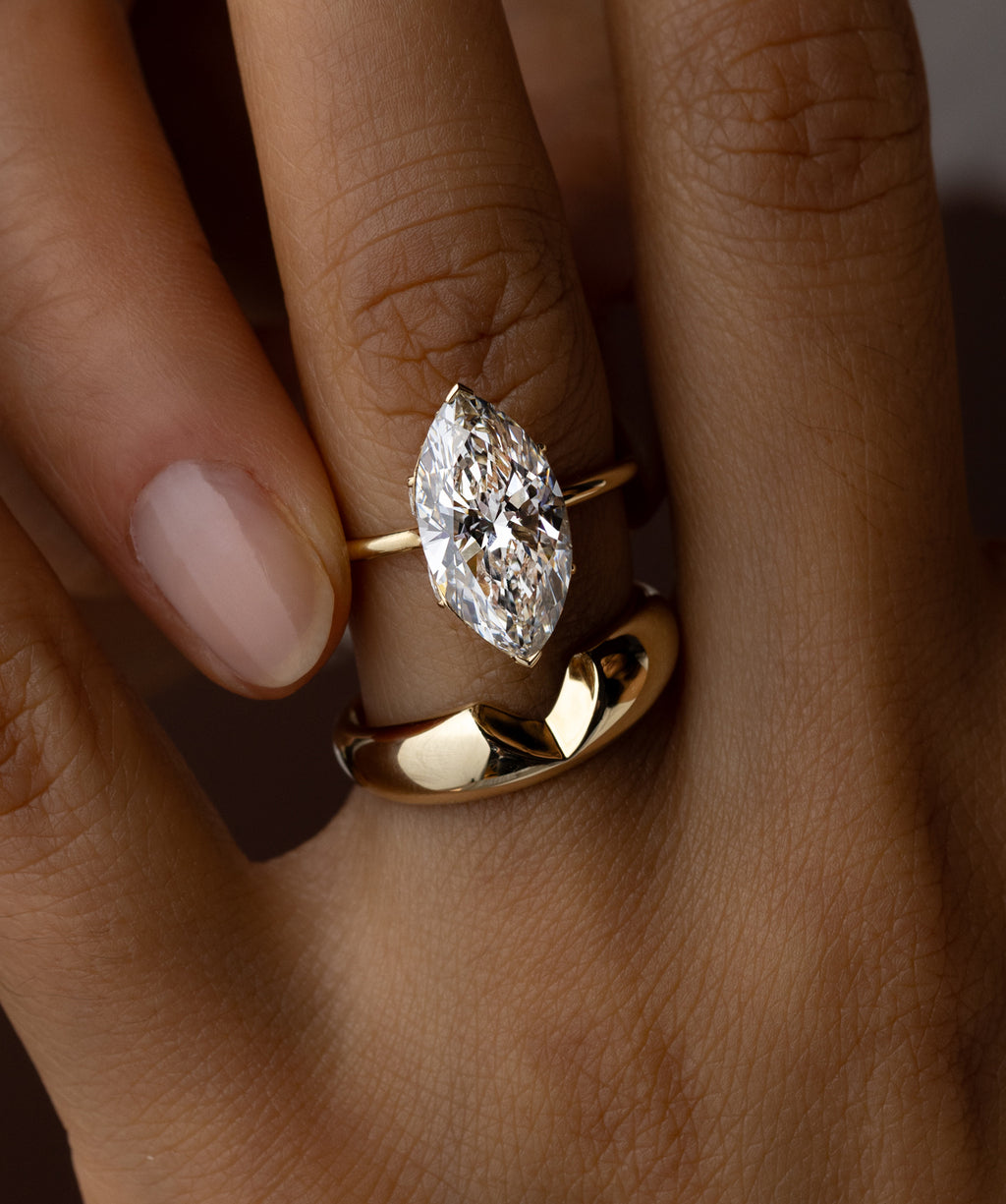
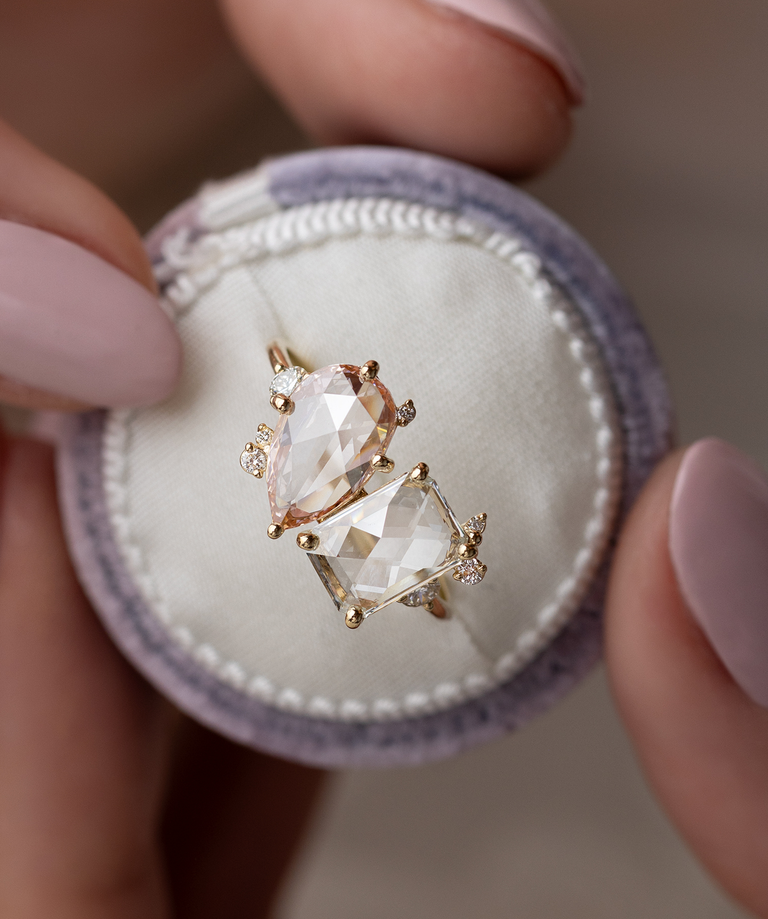
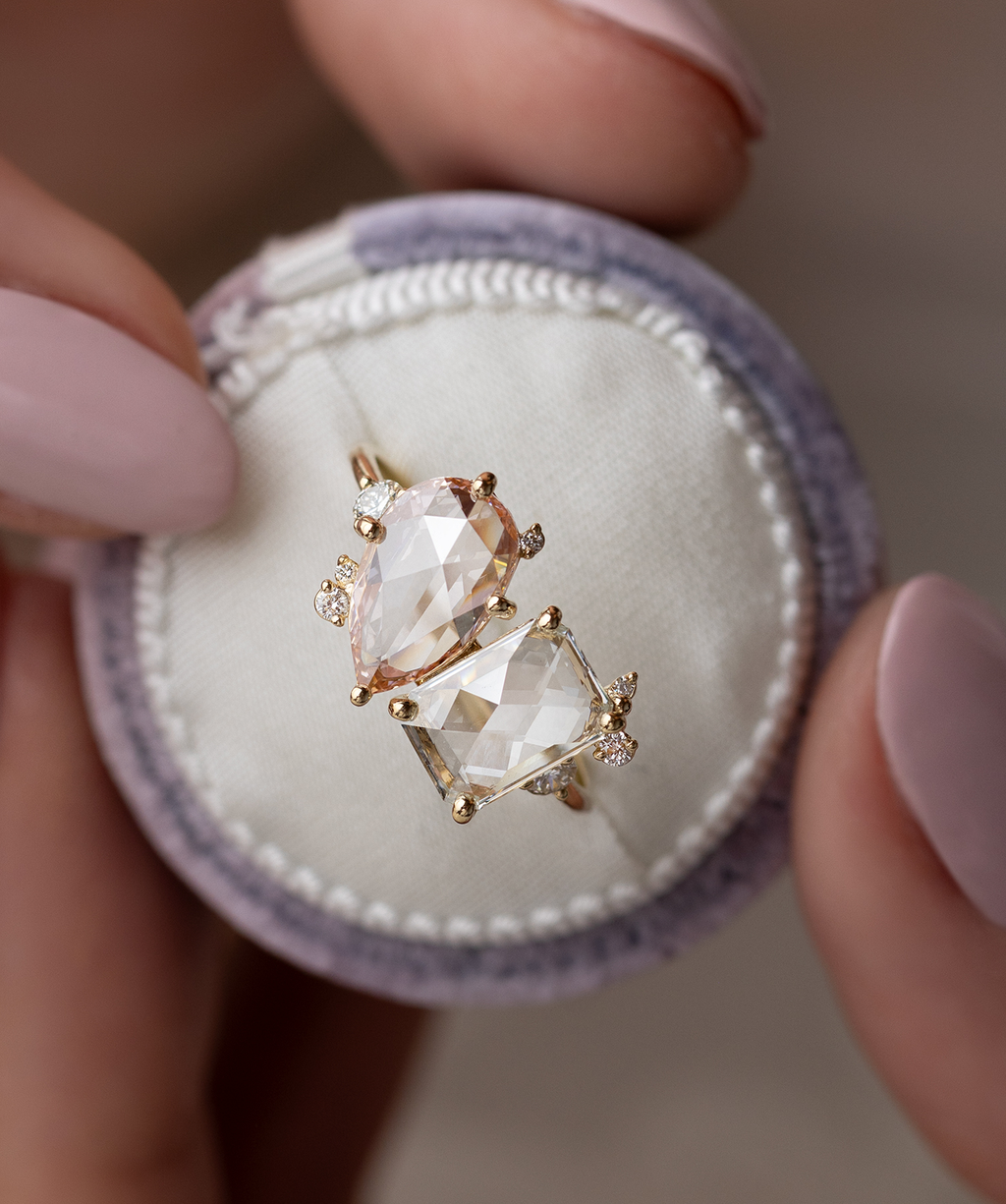
I would say once a week is more than enough, as part of your routine for something you're wearing every day. You do not need to clean your jewelry after every single wear. One example of a time that the ultrasonic is really beneficial is with stud earrings that you wear all the time. Those really need to be cleaned properly because they do get pretty nasty. If you find that your earrings are sensitive, they get kind of itchy sometimes.
They're kind of you think you're not a jewelry person because of it. If you buy solid gold jewelry or platinum and you clean it, your ears should stop feeling that itch. And it's kind of gross, but it's just the truth. Your jewelry needs to be cleaned just like your underwear. So, yeah, the ultrasonic is up.
It's for sale on our website. It's something that I am now using constantly, and I'm so glad I have this solution at home. And I think if you, try it, you're gonna see your jewelry will last longer and will, of course, look prettier. One last thing to talk about, what cannot go into the ultrasonic? Number one, you cannot put a stone in there that has a porous surface.
What I mean by that is if that stone can absorb a chemical, let's say, then you cannot put it in an ultrasonic machine, and you should not put a toothbrush directly on top of that stone. Stones like this include opal, pearl, turquoise, coral. There may be a few others that I'm not thinking of right now that we don't necessarily work in often in my collection. But if it is a chalky material that could absorb chemicals or take a scratch really easy with, like, your fingernail, just avoid that and use the hand cleaning method for the rest of the ring. You can still use a toothbrush and soap to clean the around the stone, but do not put anything on that stone because you could risk removing the beautiful polished surface of a porous stone like pearl or turquoise or opal.
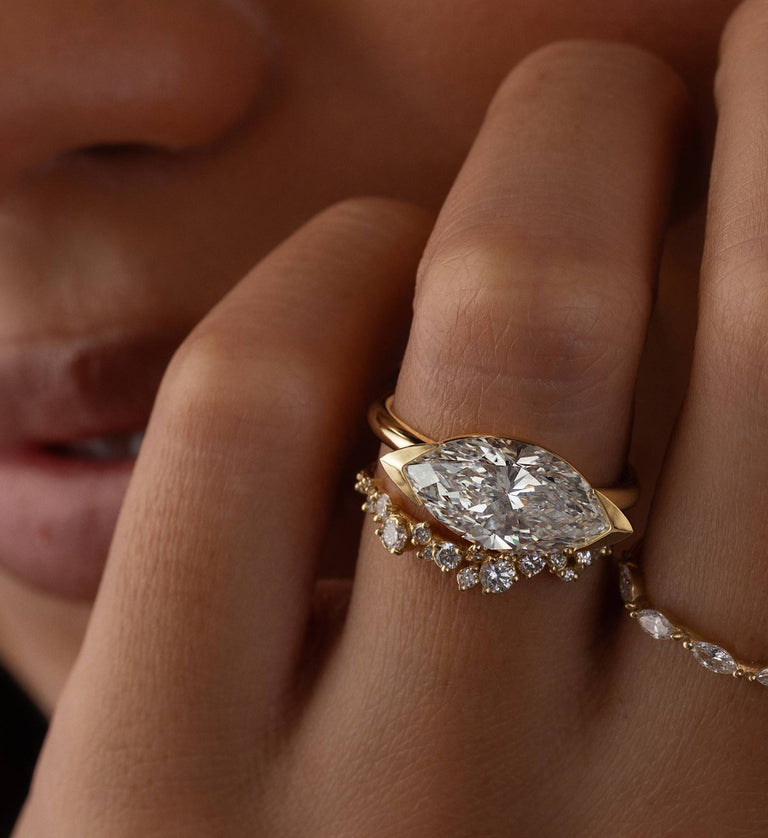
Opal should also not be soaked because, generally, it's closed behind the opal, the setting, and water can get trapped back there. That would be pretty messy. So I strongly suggest not soaking in Another thing that I do not recommend goes into the ultrasonic is a gemstone of any kind that has a visible fracture. Emerald tends to have fractures, like, just naturally ruby as well. They usually have some, I'd call it, messiness inside, and that is something to be aware of.
I mean, ultrasonic, it vibrates pretty aggressively, and it could be final straw on a stone that was already potentially going to break at some point in its life anyway. We do not carry stones that fall into this category in our collection. Even our rubies, emeralds, and high end stones like that that always do have some visual messiness inside, we would never carry a stone that had a fracture that was eventually going to release, if that makes sense. So with an emerald, that is maybe the exception because they're brittle. You don't wanna drop or smack a emerald really hard.
You probably don't wanna leave the ultrasonic on for a long time with a large, very expensive emerald, but it is okay to go in there for short bursts. And if you have a smaller sized emerald in, let's say, a stacking ring, that can go in this machine. I'm comfortable with the quality of our emeralds being able to withstand that loose vibration. I also would suggest you do not put anything if you were to buy a stone from a different jeweler, that is treated like a fracture fill. Or let's say it has a coating on the stone like a mix mystic Topaz.
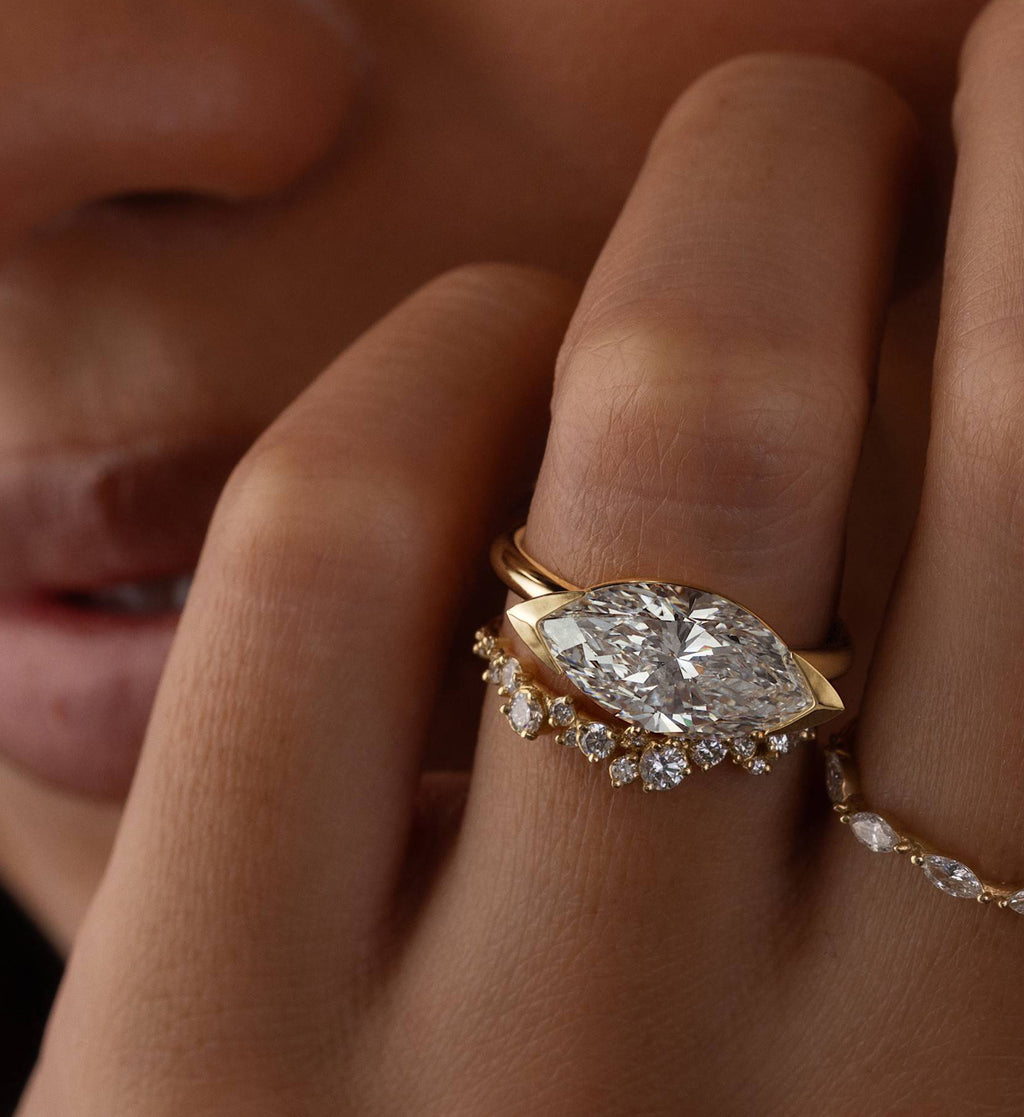
That's an actual man made coating they put on that gemstone. We do not work with Mystic coated anything, and we do not work with anything fracture filled, which means they're microscopically filling in fractures in the stone to make them look better than they actually are. We don't touch that stuff. If you're buying from Ellen and Casey, it can go in the ultrasonic. If you're buying randomly from the Internet and you don't have a lab rating certificate, you do need to proceed with some caution.
That is where the warnings about ultrasonics do come from. They're correct if you don't know if your stone has been treated or manipulated for clarity, let's say. But if it's a Melanie Casey piece, you're good. Moonstone, labradorite. I have no issue with you putting those stones from our collection in the ultrasonic.
And, again, part of the reason is because if it did break, it was gonna probably break in its lifetime anyway. And you might wanna send that back to us for a warranty replacement because that stone had something wrong with it, frankly, that we didn't know about. And, you know, if that happens, we we have a warranty to cover it for a reason. So I've I've never seen a Moonstone or a Labyrinth from our collection have a problem in an ultrasonic. Our team uses them professionally, and the ones we have in our building are heavy duty professional ultrasonics.
And, you know, if something were to happen, you know where to find us. So that's the information about what can and cannot go into the ultrasonic. Proceed with caution from jewelry from a source that you don't know the exact material you're getting, which is totally still beautiful and worth owning and wearing, but may just not be worth, risking in the ultrasonic. But if it comes from the Melanie Casey brand and it is not on our exclusion list, you can go for it. Oh, one one last thing.
Don't put anything but liquid dish soap in there for a cleaner. Do not put anything that will etch your gold away or eat out your stones. Bleach does not go in this cleaner. Even jewelry cleaner that you don't know it didn't, don't do it. It's so easy to just give it a a quick pump of dish soap or straight water.
Water will also work really well. So enjoy. I hope that you love your sparkly clean jewelry now that you know how to clean it for yourself. And please ask questions if you're not sure. We're, happy to guide you.
Have a great day, and see you next time.